


Public Information
- Details
- Hits: 14200
2026-05-09 - The Yellowknife Amateur Radio Society is re-activating the weekly VHF net on VE8YK/R (146.940 MHz with -600 kHz offset with a 100 Hz sub-audible tone). It should be accessible from VE8RAE/R (145.150 MHz with -600 kHz offset) based in Behchokǫ̀ (formerly Rae). All amateur radio operators are welcome to check in. This is part of our emergency preparedness in that it amounts to a weekly test of the repeater systems and gets local HAMs checking their own equipment. As check-ins become more regular, we can rotate net control.
If there is interest in running a CW net, please let Chris Cameron (VE8WD) or Ian Rennie (VE8IR) know.
Script follows.
- Details
- Hits: 864
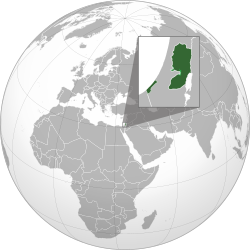
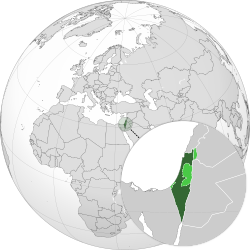

2026-05-08 - Again for Israel, Palestine (Gaza and the West Bank) and Lebanon, Google AI reveals the following information. Again keep in mind that radio transmissions can be subjected to direction-finding and the transmitting station could be targeted:
Read more: QSOs with Stations in Israel, Palestine and Lebanon
- Details
- Hits: 953
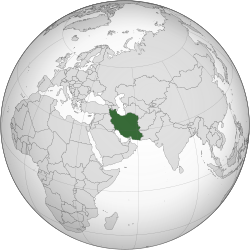
2026-05-08 - Amateurs making contacts (QSOs) with stations in Iran should exercise caution due to ongoing hostilities between Iran, Israel and the United States. Remember that their stations can be subjected to direction-finding and targeted. So a contact, like for Ukraine, could place the Iranian station in real danger. The following is what Google AI reveals (but strangely it does not urge caution and safety):
- Details
- Hits: 933
IARU 2026-04-29 - On April 21st, 2026, the FCC granted AST Space Mobile permission to conduct emergency Telemetry, Tracking & Control (TT&C) operations outside the United States in the 430–440 MHz amateur radio band for all their planned 248 satellites. More than 2,500 comments were submitted by ARRL, AMSAT, other IARU societies and individual radio operators during the FCC review period. The license allows emergency operations when no other bands are available for up to 24 hours on the center frequencies of 430.5 MHz, 432.3 MHz, 434.1 MHz, 435.9 MHz, and 439.5 MHz (each with 50 kHz bandwidth), and was granted by the FCC pursuant to Article 4.4 of the ITU Radio Regulations.
Read more: FCC Approves AST Space Mobile's License for Operations in 430–440 MHz
- Details
- Hits: 5376
The Yellowknife Amateur Radio Society (YARS) is a not-for-profit Society incorporated under the Northwest Territories Societies Act. It is a term and condition that any user making use of this website does so subject to the laws in force in Canada and the Northwest Territories - including the Copyright Act, RSC, 1985 c.C-42 and in particular section 29 (Exceptions) of that Act. While the Yellowknife Amateur Radio Society is dedicated to the amateur radio service, this website performs a largely educational function and no commercial function. The fact that the domain name has a ".com" extension does not signify that YARS is a commercial entity - just that it has an old domain name extension.
Generally the images and articles on this website are the intellectual property of the Yellowknife Amateur Radio Society, unless otherwise attributed. Any materials used on the site are used in good faith and in the belief that they are either in the public domain or licensed (for example with items that may purport to be part of the Creative Commons). YARS endeavours not to violate any copyright in any materials. If such a violation is suspected, please notify the Administrator of the website or any of the members of the Executive (i.e. directors). You may also send the Society a letter by mail bringing this matter to our attention. The Society does check its mail but infrequently. We reserve the right to respond or not to such a complaint, without any adverse inferences being made.
In the interests of promoting the amateur radio service, users are permitted to make use of materials on this website with proper attribution. A donation to the Society would be welcome but is not mandatory. Commercial use of this website and its materials is not permitted without permission from the Society.
- Details
- Hits: 21238
This page appears to be the most popular of pages on this website. This page is under review.
Individual amateur radio operators can be identified from the ISED Callsign Database: https://apc-cap.ic.gc.ca/pls/apc_anon/query_amat_cs$callsign.querylist .
- Behchokǫ̀
- Fort Smith
- Hay River
- Inuvik
- Norman Wells
- Yellowknife
- VE8ECC (VE8PR)
- VE8EMG (Unknown Club/VE8PR)
- VE8EMO (GNWT MACA Emergency Management Office/VE8WD)
- VE8PAT (Yellowknife Amateur Radio Society/St. Patrick's High School/VE8WD)
- VE8SKI (Yellowknife Ski Club/VE8WD) Weather Telemetry Station
- VE8YK (Yellowknife Amateur Radio Society/VE8WD)
- Details
- Hits: 17182
Electromagnetism (Light)
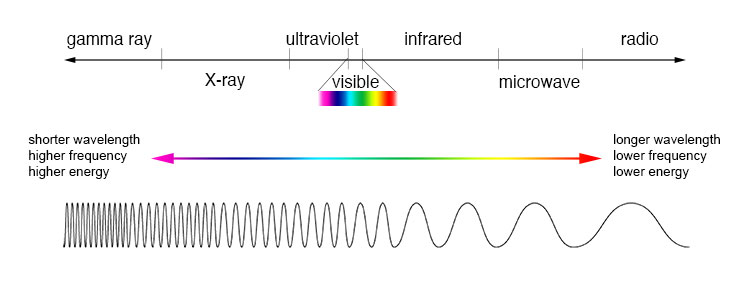
Amateur radio is a hobby that allows enthusiasts to make use of radio communications in and experiment with electromagnetic (EM) waves in the radio frequency part of the electromagnetic spectrum (about 3 Hz to 300 GHz). Some hobbyists experiment outside of the regulated radio spectrum - for instance they experiment with visible or infrared light. EM physics applies universally across the EM sprectrum. Fundamentally, amateur radio is the use of radio waves to communicate with other amateur radio operators - in non-commercial activities. One masters the way in which radio waves propagate in order to achieve communications links. These techniques have application in the commercial sector - but the amateur radio service itself is non-commercial.
There are legal conditions attached to an amateur radio licence as there is a great deal of responsibility attached to being allowed to operate on these bands. The amateur radio service is by law not for profit and not commercial. Radiowaves can be made to bounce off the upper atmosphere or celestial objects - resulting in interesting modes of propagation and communications being established all over the world without any infrastructure (such as the Internet). The possible applications are only limited by the constraints of imagination.
Quite often amateur radio plays a role in emergency communciations because much of the equipment is privately owned and functions independently of existing infrastructure. The amateur radio service is resilient. In disaster situations, amateur radio is usually the first means of communicating with affected areas (e.g. Hurricane Katrina, the 2004 Indian Ocean Tsunami or the 2011 Tōhoku Earthquake and Tsunami).
Somewhat Technical
Generally a very basic high school level of understanding of science is all that is needed. There is no age limit (lower or upper). Visually impaired persons can be accommodated and are quite adept at the use of Morse Code.
While a basic level of knowledge is necessary for passing the exams and getting licensed, one should not be put off by this.
Some might see "HAM Radio" as being archaic or old fashioned. It is not and the hobby incorporates computers, internet, satellites, advanced signal processing techniques and state of the art techology. Indeed many an IT professional has realized the allure of the hobby. Physics is physics regardless of its application in the amateur radio service or in its application in other areas...
A Hobby Limited by Imagination
The limits of amateur radio are only constrained by one's imagination. For many this hobby is a stepping stone into becoming a technologist or engineer or scientist. Here is a list of some of the activities that the members of the Yellowknife Amateur Radio Society have engaged in:
- contests (national and international);
- antenna design and construction;
- radio direction finding (Fox Hunting/ARDF) (cross between direction finding and orienteering);
- emergency preparedness planning and exercises;
- amateur radio astronomy and astronomy;
- observing atmospheric phenomena (RF propagation, solar noise, effects of aurora);
- computer programming;
- digital signals and modes of communications;
- very weak signals;
- study of the weather (thunderstorms, refraction of light in ice etc.);
- satellite tracking and communications;
- electronics, building of radios and test equipment, lasers, microwaves etc.;
- website design;
- bookkeeping;
- desktop publishing.
Going Global
To get a better flavour of the hobby, one might try any of the following:
- Radio Amateurs of Canada;
- Radio Society of Great Britain;
- REF-Union (France);
- American Amateur Radio Relay League;
- eham.net;
- Institute of Electrical and Electronics Engineers (IEEE).
Promotional Videos

- Details
- Hits: 6489
The Society meets weekly at Javaroma (on 50th Avenue in the Northwestel Building). The Society also has an Annual General Meeting annually and files a Notice of Directors and Financial Statements annually with the Registrar of Societies, Department of Justice, Government of the Northwest Territories.
To be a full member, one must be a licensed amateur radio operator in accordance with Canadian laws. It is possible for others to be associate members (for instance students and significant others (XYLs), but associate members cannot vote. Bodies corporate may become members too.
Membership dues are the primary form of revenue generated for use by the Society. This revenue is used to subsidize projects for the Society, run the Basic Qualification Course, pay for maintenance of three operational repeaters (two in Yellowknife and one in Rae) and pay for equipment obtained by the Society such as repeaters, digital communication devices and the like. Generally Society members maintain our own equipment as there is a repository of technical knowledge in the membership. That said, components still cost money.
Some members pay for their own equipment. The Society has some of its own equipment and members and other amateur radio operators are encouraged to make use of it. Projects and activities provide an excellent opportunity for members to apply their skills and to learn more about radios, computers and more.
The Society is a Not-for-Profit entity and is geared towards community service. The Society is also not political, except in so far as advocating for the amateur radio service.
- Details
- Hits: 10893

Welcome to the Home Page of the Yellowknife Amateur Radio Society (YARS). We are the main amateur radio club in the City of Yellowknife and have been in existence since being established on 19 April 1985 by Daniel Piche (VE8DP), Rolf Ziemann (VE8RZ), Paul Hokkinen (VE8PB) and Joe Hamacher (VE8JH).
Our objects, as stated in our Articles of Incorporation, are
- to foster, encourage and assist on projects, which in the opinion of the members will promote Amateur Radio;
- to further the enjoyment and understanding of amateur radio; and
- to provide assistance and support to Civil Authorities in times of emergency.